
The Roofing Accelerator by The Call Center Doctors
Unlimited roofing appointments at a fixed cost per acquisition
We spend $150,000 a day on Google roofing leads and book hundreds of roofing appointments every day. Now that machine books storm and retail, residential and commercial appointments onto your calendar -- sized to what your crews can install, at a fixed cost per acquisition.
jason@ccdocs.comSarah, who answers our phone line, is our AI assistant.
Made with AI
The problem with buying roofing leads
You have bought leads before. You know how that story usually ends.
Every owner who has tried to buy roofing leads has seen the same thing. The names show up, somebody in your office calls them back when they get a free minute, and by then the homeowner has already talked to two other roofers.
That is not a marketing problem. It is a work problem. A lead is a name and a number. Somebody still has to call it within minutes, reach a person, answer the insurance question, find a time when the decision-maker is home, and show up. Until all of that happens, you have paid for a maybe.
Booked roofing appointments are different. An appointment is that work already done: a homeowner or a property manager with a roof that needs attention and a set time on your calendar.
It is a fixed cost per acquisition. In our founder's words: unlimited sales at a fixed cost per acquisition. Every signed job's real cost shows up on your books, so you can hire, order and schedule crews against numbers you can see.
What a lead costs you after you pay for it
Every lead you buy starts a clock. These are the ways the clock runs out, and every one of them is money you already spent walking out the door.
The homeowner does not wait
39% of homeowners expect to hear from a roofer the same day.1 A callback tomorrow has already lost the homeowners who wanted today.
You are one of three quotes
66% of homeowners gather three roofing quotes; just 1% accept one quote.1 Every appointment is a bake-off, and the roofer who shows up on time and prepared starts ahead.
The first call wins
Firms that contact a lead within an hour are nearly 7 times as likely to qualify it as firms that wait even one hour longer -- and over 60 times as likely as firms that wait 24 hours.2 Your team is on roofs for most of that hour.
Most companies are slow
In an audit of 2,241 US companies, only 37% answered a web lead within an hour and 23% never responded at all.2 Among the companies that responded at all, the average response time to a web lead was 42 hours.2
The phone rings. Nobody answers.
27% of calls to home services businesses go unanswered.3 Some of those callers had a roof to fix that week, and the next roofer on their list picked up.
Buying leads vs booking appointments: who does the work
A lead hands you the work. An appointment hands you the result of the work. Side by side, the difference is plain.
| What changes | The usual way | With The Roofing Accelerator |
|---|---|---|
| What you receive | A name, a number and a maybe | A set time on your calendar with a homeowner or a property manager |
| Who makes the first call | You, somewhere between inspections and installs | We do, and every inbound call is answered |
| Who follows up | Whoever has a spare minute that week | We do, with follow-up and nurturing on every lead |
| What work it covers | Whatever the list happens to hold | Storm and retail, residential and commercial, in one flow |
| What sets your cost | How many leads you bought, good or bad | How many jobs you signed, at a fixed cost per acquisition |
| Who decides the volume | The lead seller, based on what came in that week | You do: which markets, storm or retail, and how many your crews can take |
The scale behind every appointment
Scale is why the appointments keep coming. These are the facts.
Before you trust anyone with your calendar, you should know what stands behind the appointments: a machine that runs every day, in storm markets and retail markets, for residential and commercial roofs. You are not our first roofing company, and your calendar is not anyone's experiment.
In our founder's own words:
We spend $150,000 a day on Google roofing leads and book hundreds of roofing appointments every day.
Jason Shouldice, founder We've worked with over 1,500 roofing companies.
Jason Shouldice, founder
A market nobody owns
Look at the market you sell into. The US roofing contractor industry is a $92.5 billion market in 2026.4 There are 108,598 roofing contractor businesses in the US in 2026.5 The average US roofing contractor does roughly $850,000 a year in revenue.6
If your company is already well above that average, you know the ceiling was never demand. It is the phones, the follow-up and the calendar. That is the part we take over, one signed job at a time.
The top five roofing service companies control less than 10% of the market.7 Nobody owns your county. The work goes to whoever answers first, shows up prepared and follows up.
This page is about what happens after the click: the call, the follow-up and the booked time.
Speed to lead decides who signs the job
A booked appointment is a lead that was reached in time. That is the whole game, and these are the numbers behind it.
That is why the phone matters as much as the ad. We answer every inbound call and follow up on every lead. The page on every call answered and every lead followed up shows exactly how.

Storm appointments, booked while the storm is still news
Made with AI
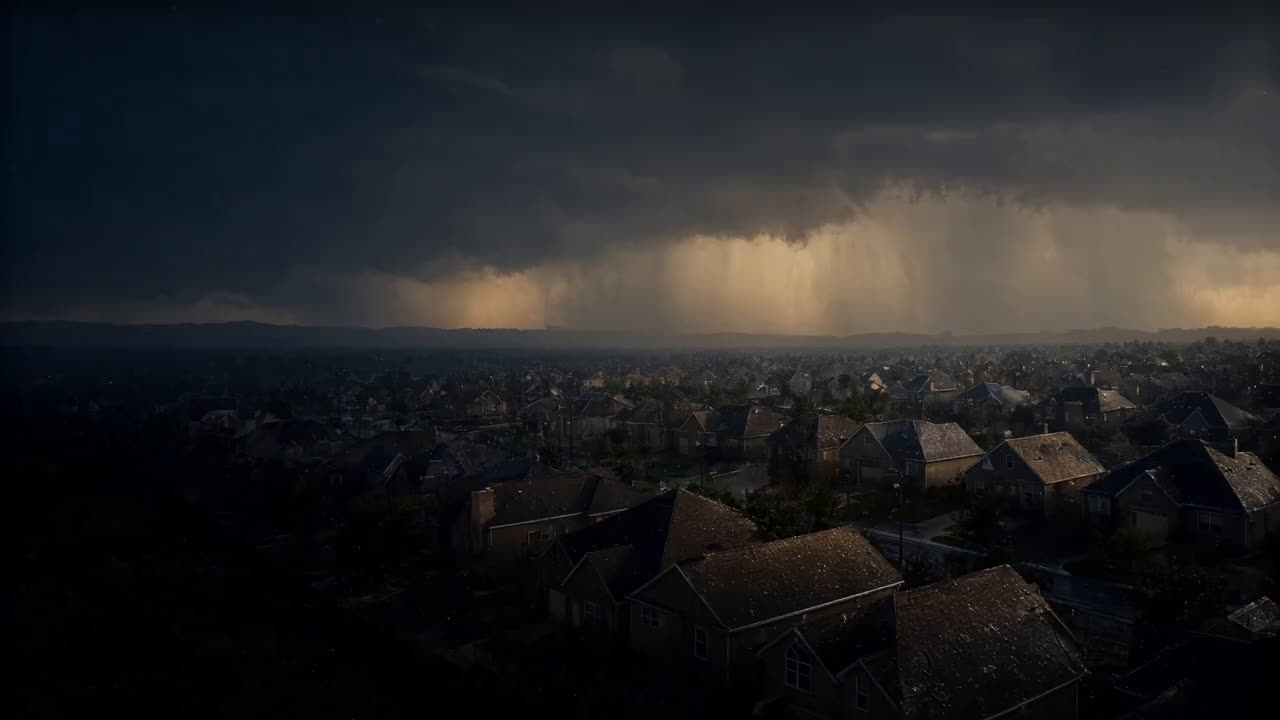
Storm work is a sprint with no starting gun. When hail hits a neighborhood, every homeowner on the street needs an inspection at the same time, and every roofer in the region wants the same driveways.
The storm bill stays huge. Insured losses from severe storms in the US topped $50 billion a year for three straight years through 2025.10 835,058 homeowner hail claims were filed in 2025.10 Up to 80% of severe-storm claims are hail-related.10 Behind every one of those claims is a homeowner who needs an inspection and a roofer to trust.
Insurance work is its own skill. 40% of roofing contractors do insurance work; 47% of them cite claims complexity and 36% adjuster delays as major challenges.11 A storm appointment is only worth your drive if the homeowner understands the process and the person who decides is home when your inspector arrives.
That is the standard for a storm appointment from The Roofing Accelerator: a homeowner in the area the storm hit, a set time, and a clear reason to get on the roof.
Retail appointments: the work that runs all year
Made with AI
Storms make the headlines. Retail pays the bills in the months between them. A retail job is a homeowner who is not waiting on an insurance check: the roof is old, the leak is back, the house is going on the market, or they simply want it done right.
The demand is already sitting in the housing stock. The median US owner-occupied home is 42 years old (2024), up from 31 in 2005.12 64% of all roofing services are performed on existing buildings (repair and replacement, not new builds).7
US homeowners are expected to spend $523 billion on improvements and repairs in early 2027.13 Part of that is a roof, and somebody is going to book the appointment. The only question is whose calendar it lands on.
Retail homeowners shop carefully, and that works in your favor. 74% of homeowners say responsiveness and communication matter more than the price of the project.14 The roofer who calls back, shows up on time and explains the job clearly wins on something no low bid can copy.
Some of your next retail appointments are homeowners who already know your name, and they are sitting in your CRM right now. We call, text and email the ones who agreed to hear from you, within the consent and opt-out rules for calls and texts, and the page on the money already sitting in your CRM shows the math.

Residential and commercial, one appointment flow
Made with AI
Residential and commercial are two different sales. A homeowner decides at the kitchen table, often with a spouse, often in one visit. A commercial roof has a property manager, an owner, a budget cycle and sometimes a board, and the decision can take months. That is why a commercial roofing lead is only a start: somebody still has to find the person who approves the budget and set a time with them.
Many roofers stay on one side because running both takes two playbooks. You do not have to choose: we run both, and you decide the mix.
Commercial work brings bigger roofs, maintenance plans and owners with more than one building. That is steady revenue a future buyer can see and count, which is why it matters for a company that is ready to sell.
You have a sales problem. We will sell. Both kinds of appointment need a closer who can win them, so we recruit, train and run your closers: read about the sales team we hire, train and run.
What a fixed cost per acquisition does to your profit
Cost per acquisition means what each signed job costs you to win. When nobody tracks it, your profit floats with it: a slow week of closing or a jump in ad costs can quietly eat the margin on a whole month of installs. What it is for your markets, we walk through with you on the strategy call.
It matters because margin is where roofers get squeezed. Across the trade, one-third of roofing contractors report EBITDA margins between 6% and 15%.11 EBITDA is your yearly profit before interest, taxes and a few accounting items. At a margin like that, every wasted marketing dollar comes straight out of what you keep.
We will squeeze every last penny out of every last thing in your business. It starts here, with the line that decides what each job costs you to win.
Put your own numbers through these steps in the calculator that follows. Once you are in, every line shows up as it happens. Real-time AI analytics, so you know where every penny is at all times. That is part of a complete financial overhaul of your books.
| Line | What it is | The formula | Why it matters |
|---|---|---|---|
| 1 | Signed contracts | appointments a month x your close rate | We fill the calendar, up to what your crews can install. Your close rate is the one number your sales team owns, and it is the first one we work on together. |
| 2 | Revenue | signed contracts x your average job | Storm and retail jobs have different averages. Track them apart and you see which one pays you more for the same crew day. |
| 3 | Acquisition cost | signed contracts x your cost per acquisition | This line is on your books every week, job by job, so you always know what growth is costing you. |
| 4 | Gross profit | revenue x your gross margin, minus acquisition cost | Your gross margin is yours: what is left after materials, crews and install, before marketing. We never guess it for you. You bring it, and we protect it. |
| 5 | What you keep | gross profit minus overhead | Overhead is the last place profit leaks. Cut back-office costs up to 30% with our nearshore team in Monterrey and Guadalajara. |
Your own appointment math, step by step
Type in your leads a month, your close rate, your average job and your own margin before interest and taxes. You see an estimate of your yearly revenue and the profit it carries at those numbers, and what your company could be worth run as a system instead of around you.
Every number in it is yours, except the valuation multiples, which come from the source linked at the bottom of this page. It is an estimate, not an appraisal.
Six questions to ask of every appointment, including ours
An appointment that falls apart in the driveway costs you twice: the drive, and the job you could have been at instead. These are the six ways appointments go wrong, and the question that stops each one. Ask them of every appointment you get from anyone, us included. Bring your answers to the strategy call and hold us to the same list.
Nobody is home
Is there a set time, confirmed with the homeowner, and a reminder before the visit?
The decision-maker is missing
Is every person who signs the contract at the table? On a commercial roof, who approves the budget?
The address is outside your map
Is the property inside the area your crews really cover, and is it a roof type you install?
There is no need yet
Is there damage, age, a leak or a sale driving this, or only curiosity?
The insurance question is open
On storm work: has the homeowner filed a claim or asked for an inspection first, and do they know how the process works?
The appointment went stale
Was the time set within days of the first contact, while the homeowner still cared?
After the appointment: where the money leaks out
Booking the appointment is half the job. The other half is what happens after your inspector backs out of the driveway.
Only 16% of roofing contractors consistently follow up with homeowners the same day on unsold estimates.11 Sales reps make only 1.3 call attempts, on average, before giving up on a new lead.9 That is where appointments you already paid for go cold.
So the appointment is not where our work stops. Every unsold estimate gets follow-up and nurturing until the homeowner gives you a clear answer, and every homeowner who calls back reaches someone who picks up.
A job that signs on the second visit came from an appointment you already have. Follow-up is how you get the full profit out of the appointments already on your calendar.
Volume you can install, profit you can keep
Not a thin $5M-$10M. A wildly profitable $5M-$10M.
Unlimited appointments are only worth something if your crews can install the jobs they turn into. That is why install capacity and being ready for the volume are part of the promise below, printed plainly. We would rather tell you now than fill a calendar you cannot serve.
There is no hard revenue minimum. It is for any roofing company that is ready to add $5M-$10M profitably.
The guarantee covers new business. Profit comes from the work we do together on every margin lever, and we show you that math line by line.
Your calendar, your crews, your company
Handing someone your calendar is a big step. You have been burned before, and you should not hand control to anyone who has not earned it.
You keep final say. We run day-to-day. Every week you get a report on the whole company, and you approve the big calls.
You decide which markets we book, storm or retail, residential or commercial, and how many appointments your crews can take. We run the phones, the follow-up and the booking, and every week you see exactly what it produced.
What we build stays yours. When the agreement ends, you keep the software and all the data in it, including every homeowner we booked, plus the closers and staff we hired and the written playbook.
We are doing this together.
The Winter Sprint: ready before spring
Winter is around the corner. Prepare now.
The roofers who own the spring are the ones who spent the winter getting ready: the phones answered, the follow-up running, the CRM worked, the closers trained. The first 90 days: the Winter Sprint.
- Weeks 1-2
Phones answered, old leads worked
Weeks 1-2: phones, CRM and reactivation wired in. Every inbound call is answered, and the old leads in your CRM get called, texted and emailed, within the consent and opt-out rules.
- Weeks 3-6
A sales team ready to close
Weeks 3-6: closers and AI coaching. The appointments now meet a sales team that is ready to close them.
- Weeks 7-13
Appointments at full flow
Weeks 7-13: the full appointment flow, and books closed by the 5th. Storm and retail, residential and commercial, at a fixed cost per acquisition.
Your questions about roofing appointments, answered
What is the difference between a roofing lead and a roofing appointment?
A roofing lead is contact information: a name, a phone number and some interest. Somebody still has to call it fast, reach the homeowner, answer the questions and set a time. A roofing appointment is that work already done: a homeowner or a property manager with a roof that needs attention and a set time for your inspection or estimate. With a lead, you buy the chance to do the work. With an appointment, the booking is done before you arrive.
How can a roofing company get more appointments fast?
Speed decides it. Calling a lead within 5 minutes instead of 30 makes contact 100 times more likely and qualification 21 times more likely.8 So the fastest path is to answer every inbound call, call every web lead within minutes and work the old leads in your CRM again, within the consent and opt-out rules. The Roofing Accelerator does all three, and books storm and retail appointments on top of them.
How much do roofers pay per lead?
The cost of a lead moves with the channel, the market and the season, and on its own it tells you almost nothing. A low-cost lead that never signs is the most expensive lead you can buy. The number that decides your profit is what each signed job costs you to win. The Roofing Accelerator works at a fixed cost per acquisition, and we walk through it with you on the strategy call: 45 minutes on Zoom, weekdays 10am-6pm ET.
What does a fixed cost per acquisition mean for roofing appointments?
Cost per acquisition is what it costs to win a signed job. In our founder's words: unlimited sales at a fixed cost per acquisition. What that looks like for your markets and your mix is set with you on the strategy call, and every signed job's real cost shows up on your books, so you plan crews, materials and profit around numbers you can see.
Can you book storm, retail and commercial roofing appointments?
Yes. We book storm appointments for homeowners after hail and high winds, and retail appointments for homeowners replacing an aging roof, fixing a leak or getting a house ready to sell. A commercial appointment has to reach the person who approves the budget, such as a property manager or an owner, and our sales work gets your closers ready for that longer sale. You choose the mix that fits your crews. USA only. Storm and retail. Residential and commercial.
What is a good appointment setting rate for a roofing company?
Never judge an appointment setter by how many it sets. The rate that matters is how many appointments turn into signed jobs, and at what cost. A high booking count with a weak close rate still loses money. That is why we measure the cost of each signed job and put it on your books. Bring your close rate and your average job to the strategy call, and we run the math with you.
How fast do roofing appointments start?
The work starts in week one. The first 90 days: the Winter Sprint. Weeks 1-2: phones, CRM and reactivation wired in. In those first two weeks, the homeowners already in your CRM, who know your name, are called, texted and emailed again, if they agreed to hear from you. Weeks 3-6: closers and AI coaching. Weeks 7-13: the full appointment flow, and books closed by the 5th.
What do I need in place before I take on more roofing appointments?
Three things: crews who can install the extra jobs, a sales team that can close them, and the discipline to follow a playbook. If you are short on closers, we recruit, train and run them. If your phones go unanswered, we answer every inbound call. What we cannot do is install the roof for you, so be honest about your crew capacity on the strategy call.
Who owns the homeowner data when the agreement ends?
You do. When the agreement ends, you keep the software and all the data in it: your CRM, your door-knocking app, your inventory system and your analytics. Every homeowner we booked for you is in that data. The closers and staff we hired stay with you, and so do the written playbook and every written process. Your homeowners stay your homeowners.
What exactly is the guarantee?
At least $5M in new business in the next 12 months. In writing. We aim for $10M. If we miss $5M, we keep working free until we hit it. The conditions, printed plainly: you follow the playbook; you have install capacity; you are ready for the volume; you sign a 12-month agreement. The full terms are in the written agreement.
Apply, then book your strategy call
Life is short. None of us is promised tomorrow. Why wait a day?
The Roofing Accelerator Strategy Call: 45 minutes on Zoom, weekdays 10am-6pm ET. Bring three numbers: your close rate, your average job and how many installs your crews can take in a week.
We are doing this together.
- 45 minutes on Zoom, weekdays 10am-6pm ET.
- Or call Sarah, our AI assistant, at (844) 766-3535. She answers, qualifies you and books your strategy call, or sets up a call back with our team.
- jason@ccdocs.com
A short application, then you pick a time for your strategy call on the spot.
Step 1 of 3
Your application is in.
Pick a time for your Roofing Accelerator Strategy Call now. You can also call Sarah, our AI assistant, at (844) 766-3535, or write to jason@ccdocs.com.
Book your Roofing Accelerator Strategy Call45 minutes on Zoom, weekdays 10am-6pm ET.
Keep reading
Every part of The Roofing Accelerator has its own page.
- The whole plan, in one readThe Roofing Accelerator
- Sales teamthe sales team we hire, train and run
- Call centerevery call answered and every lead followed up
- CRM reactivationthe money already sitting in your CRM
- Financial overhaula complete financial overhaul of your books
Sources
Every number on this page is either our own, stated by our founder, or linked to its source below.
- Roofing Contractor, "The Homeowner's Roofing Journey in 2026" (2026) https://www.roofingcontractor.com/articles/102121-the-homeowners-roofing-journey-in-2026
- Harvard Business Review, "The Short Life of Online Sales Leads (HBR, March 2011)" (2011) https://hbr.org/2011/03/the-short-life-of-online-sales-leads
- Invoca, "See How Much Missed Sales Calls Cost Home Services Businesses" (2024) https://www.invoca.com/blog/how-much-missed-sales-calls-cost-home-services-businesses
- IBISWorld, "Roofing Contractors in the US - Market Size Statistics (2026)" (2026) https://www.ibisworld.com/united-states/market-size/roofing-contractors/198/
- IBISWorld, "Roofing Contractors in the US - Number of Businesses (2026)" (2026) https://www.ibisworld.com/united-states/number-of-businesses/roofing-contractors/198/
- IBISWorld, "Roofing Contractors in the US - Market Size Statistics (2026)" (2026) https://www.ibisworld.com/united-states/market-size/roofing-contractors/198/
- IBISWorld, "Roofing Contractors in the US - Number of Businesses (2026)" (2026) https://www.ibisworld.com/united-states/number-of-businesses/roofing-contractors/198/
- AXIA Advisors, "Private Equity in Roofing: Why Roofing Acquisitions are Booming" (2025) https://axiaadvisors.com/private-equity-in-roofing/
- InsideSales.com (Lead Response Management Study), "Lead Response Management Study" (2007) https://25649.fs1.hubspotusercontent-na2.net/hub/25649/file-13535879-pdf/docs/mit_study.pdf
- InsideSales.com (XANT), "2014 Annual Lead Response Report" (2014) https://resources.insidesales.com/wp-content/uploads/2019/11/2014-Lead-Response-Report.pdf
- Leader's Edge (The Council of Insurance Agents & Brokers), "Hail Is Falling, Losses Aren't" (2026) https://www.leadersedge.com/p-c/hail-is-falling-losses-arent
- Roofing Contractor (reporting ServiceTitan's 2026 Roofing & Exterior Market Report), "Roofing Contractors Bet on Tech for Growth in 2026" (2026) https://www.roofingcontractor.com/articles/101759-roofing-contractors-bet-on-tech-for-growth-in-2026
- NAHB (analysis of Census American Community Survey), "How Old is Today's Housing Stock?" (2026) https://www.nahb.org/blog/2026/03/how-old-is-todays-housing-stock
- Joint Center for Housing Studies of Harvard University (LIRA), "Remodeling Growth to Slow Sharply in Early 2027" (2026) https://www.jchs.harvard.edu/press-releases/remodeling-growth-slow-sharply-early-2027
- Roofing Contractor (sponsored; reporting Roofr's 2026 Homeowner Study, 292 homeowners), "What Homeowners Actually Want From Their Roofer" (2026) https://www.roofingcontractor.com/articles/102503-what-homeowners-actually-want-from-their-roofer-and-its-probably-not-what-you-think
- AXIA Advisors, "How Much Do Roofing Companies Sell For?" (2025) https://axiaadvisors.com/how-much-do-roofing-companies-sell-for/